Ford Labs
Year
2024
Duration
4 Months
Role
UX/UI Designer
Team
10 Members
Skills
01
The Challenge
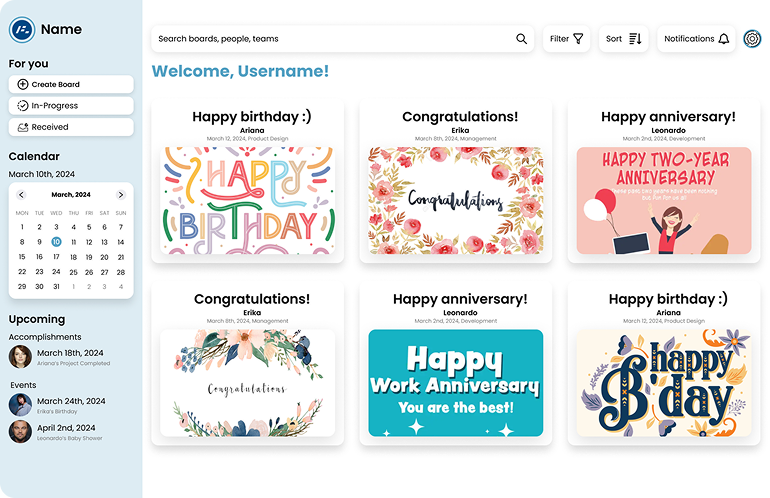
This project entailed designing a digital space tailored for FordLabs employees to recognize birthdays, accomplishments, milestones, and other events — providing a cost-effective, collaborative, and user-friendly platform to celebrate each other within the organization.
Who is Ford Labs?
As a dedicated team within Ford, FordLabs partners with Ford businesses to solve significant problems by developing digital products and services in a lean, human-centered fashion.
The Problem
Employee recognition and celebration are significant in increasing work motivation and efficiency. Ford Labs currently uses Kudoboard — an online platform for digital greeting cards. While functional, Ford Labs wanted a solution that better fits their culture and internal workflows.
The Proposal
A collaborative web platform where employees create shared celebration boards — combining personalized messages, voice notes, GIFs, and themed templates — delivered on schedule with calendar integration and department-level organization.
02
Understanding the Team
Ford's Work Culture
We interviewed five FordLabs employees to understand their current interactions, identify needs for virtual celebrations, explore existing systems such as Kudoboard, Slack, and Webex, and uncover any pain points in their celebration processes. We broke down our findings into categories like celebratory efforts, interaction methods, communication platforms, and useful features.
What we gathered
Employees appreciate features that allow them to express their personalities within time constraints.
They prefer simplicity — a clean, fast-loading interface where features are easy to find.
The platform should include GIFs, emoji reactions, themed templates, and calendar notifications.
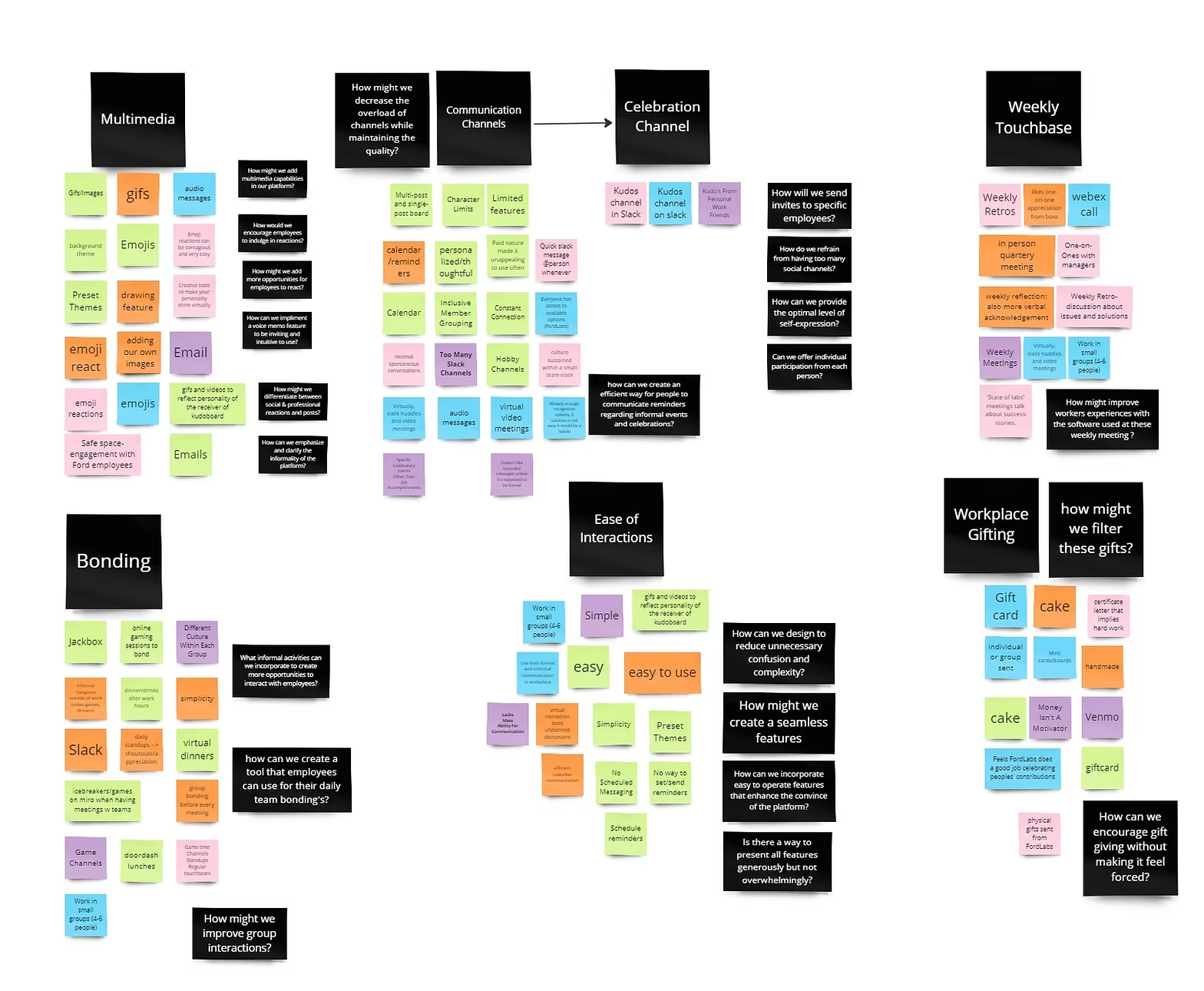
Affinity diagram — themes clustered from employee interviews
Assessing the Market
We explored ten employee celebration platforms similar to Kudoboard. We broke down each platform by features, price, and board types, and compared them to Kudoboard. This helped us identify features to include in our model and informed our decision-making process.
Calendar
Track birthdays, anniversaries, and work events within the platform.
Point System
Manager-initiated recognition points rather than transactional rewards.
Gift Cards
Allow gift card donations within birthday posts to show appreciation.
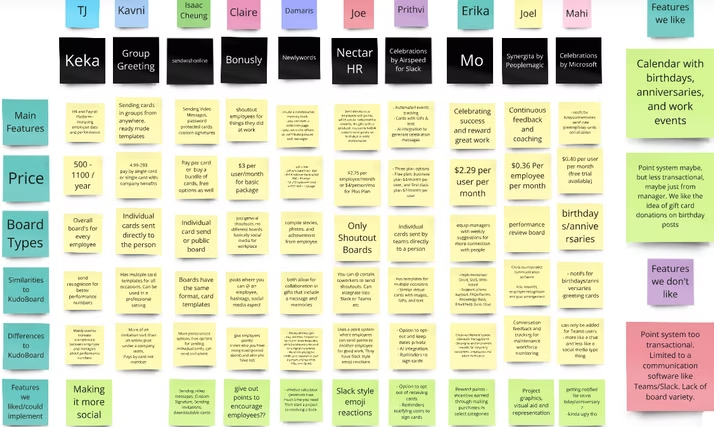
Competitor analysis — gaps and opportunities in the market
03
Mapping the Journey
After our preliminary research, we took time to understand how Ford Labs employees should navigate the platform — creating a board for celebrating and recognizing their co-workers. Our team developed a site flow to visualize how the site might look and function, drawing inspiration from our sketches and findings.
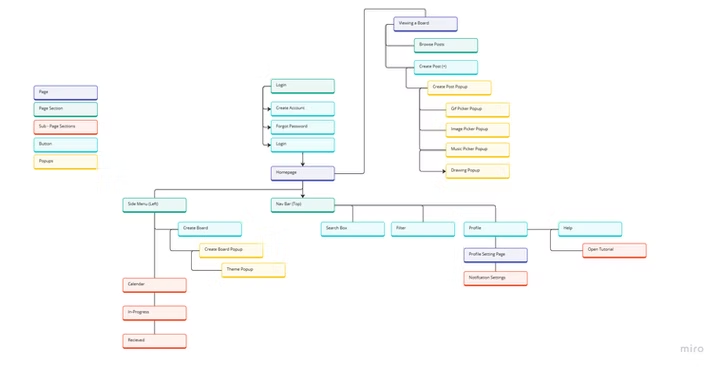
Full information architecture and site flow
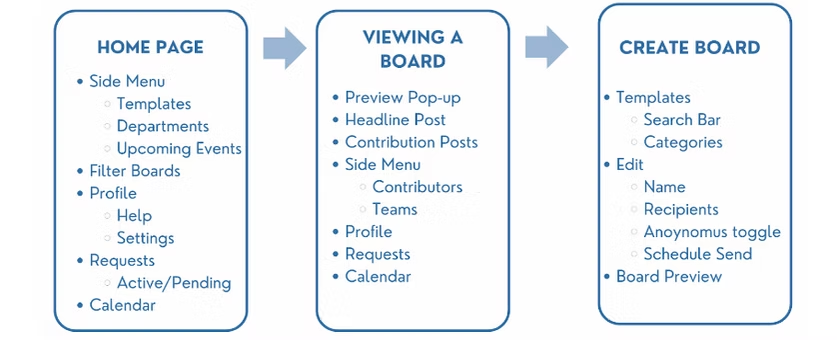
Simplified user journey — narrowed into three main categories
04
Exploring Directions
For the Sketches and Ideation phase, we generated innovative ideas by drawing inspiration from our primary and secondary research. We wanted this process to be quick and well-rounded, so we did a round of Crazy 8s and dot-voted on our favorite features.
Our takeaways
Our approach allowed us to efficiently explore a wide range of ideas by drawing insights from diverse digital platforms. The exercise helped us identify innovative functionalities that could enhance our digital design space model and laid a strong foundation for the subsequent development and refinement of our potential solution.
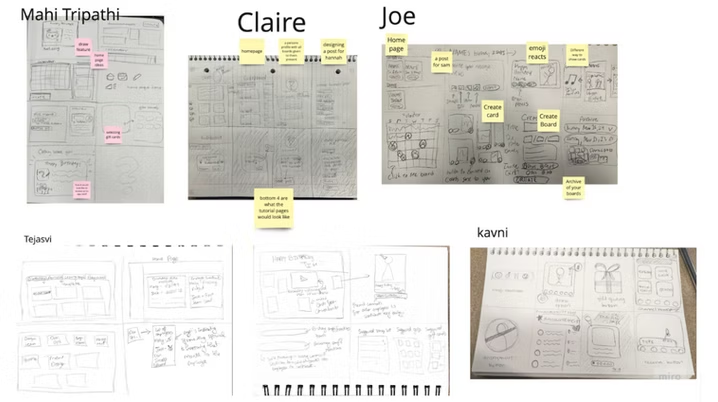
Pencil sketches from Crazy 8 ideation sessions
05
Taking Shape
After ideation we moved into mid-fidelity wireframes — grey-scale layouts that established the core structure of each screen. These were presented to users for feedback before any visual design decisions were made.
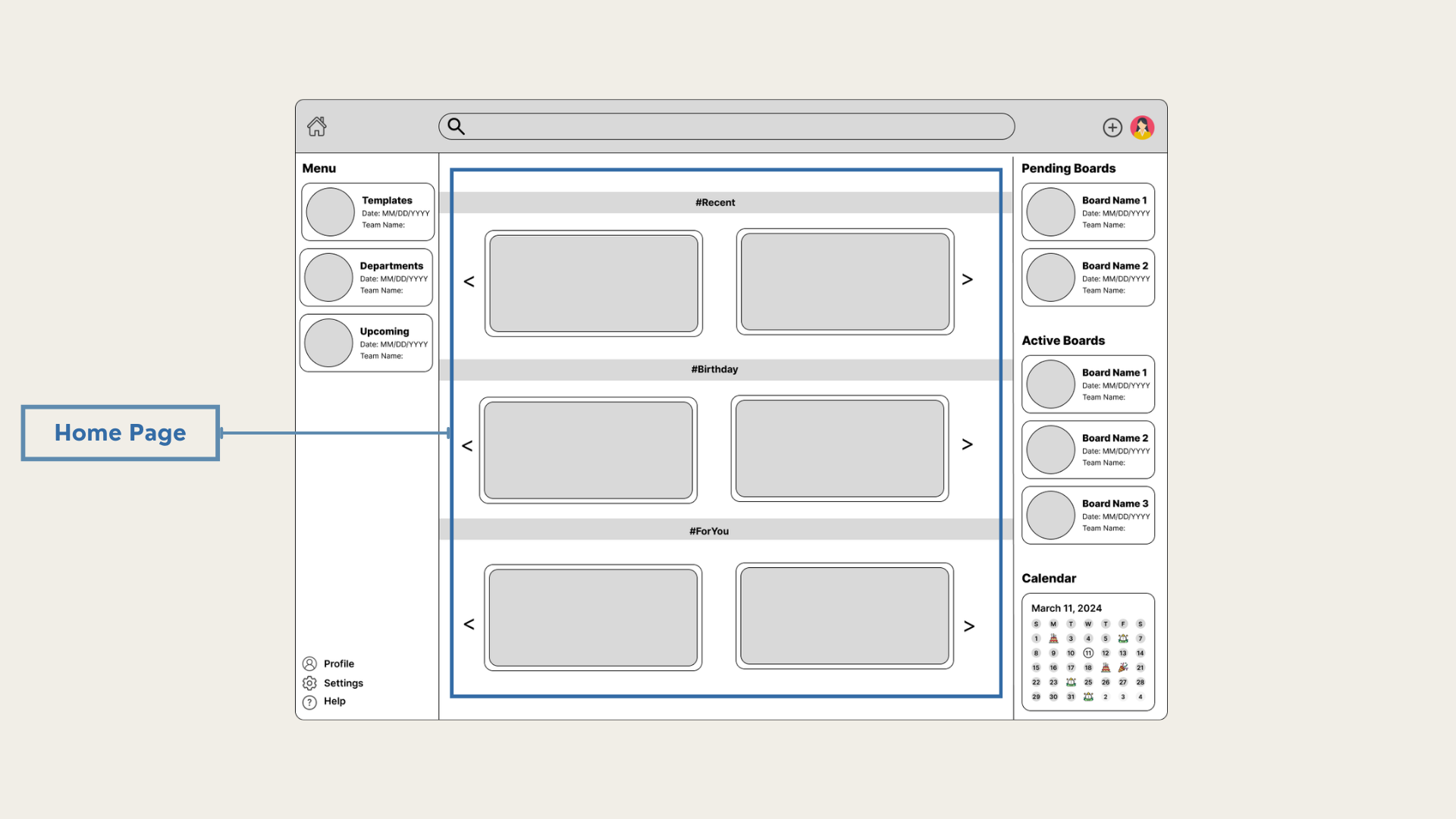
Home Page — #Recent, #Birthday, #ForYou carousels
06
Building the System
After our initial research and understanding of who the Ford employees are, we got a clearer idea of what the celebration app should represent. Our group created a mixed moodboard of different styles and ideas we thought would fit best.
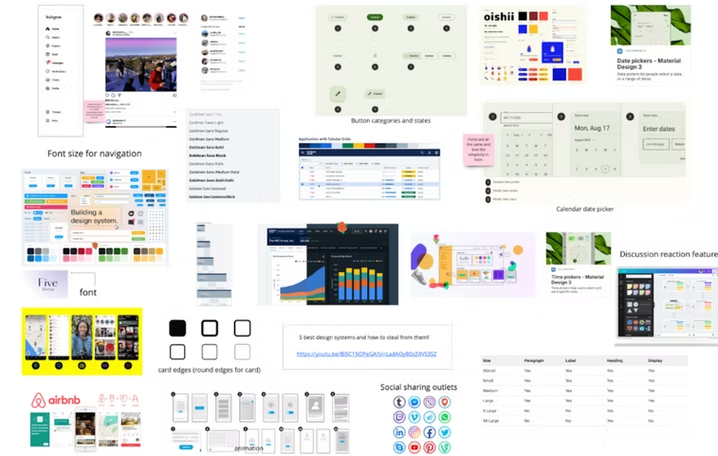
Mood board — visual direction and design language
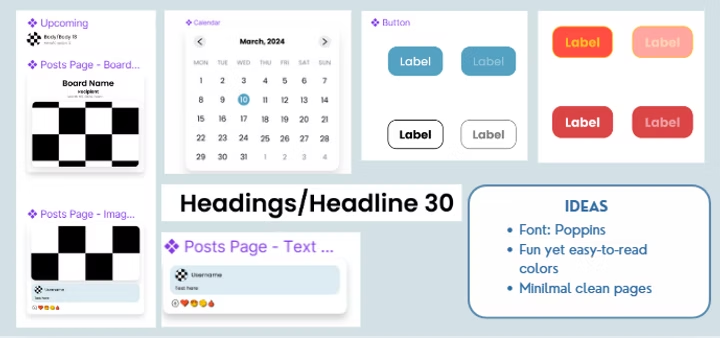
Final design system with component library and page map
07
The Final Product
After completing our mid-fidelity wireframes, we received constructive feedback to help better our final solution. Here are some of the reviews our team received after usability testing:
"Side menu bars are way too overbearing... this is all very confusing."
"Way too many functions, I don't think I'll ever use half of these."
"I like the emojis, but what happens when there are multiple events — will it get crowded?"
These reviews led us to re-work and get to our final solution:
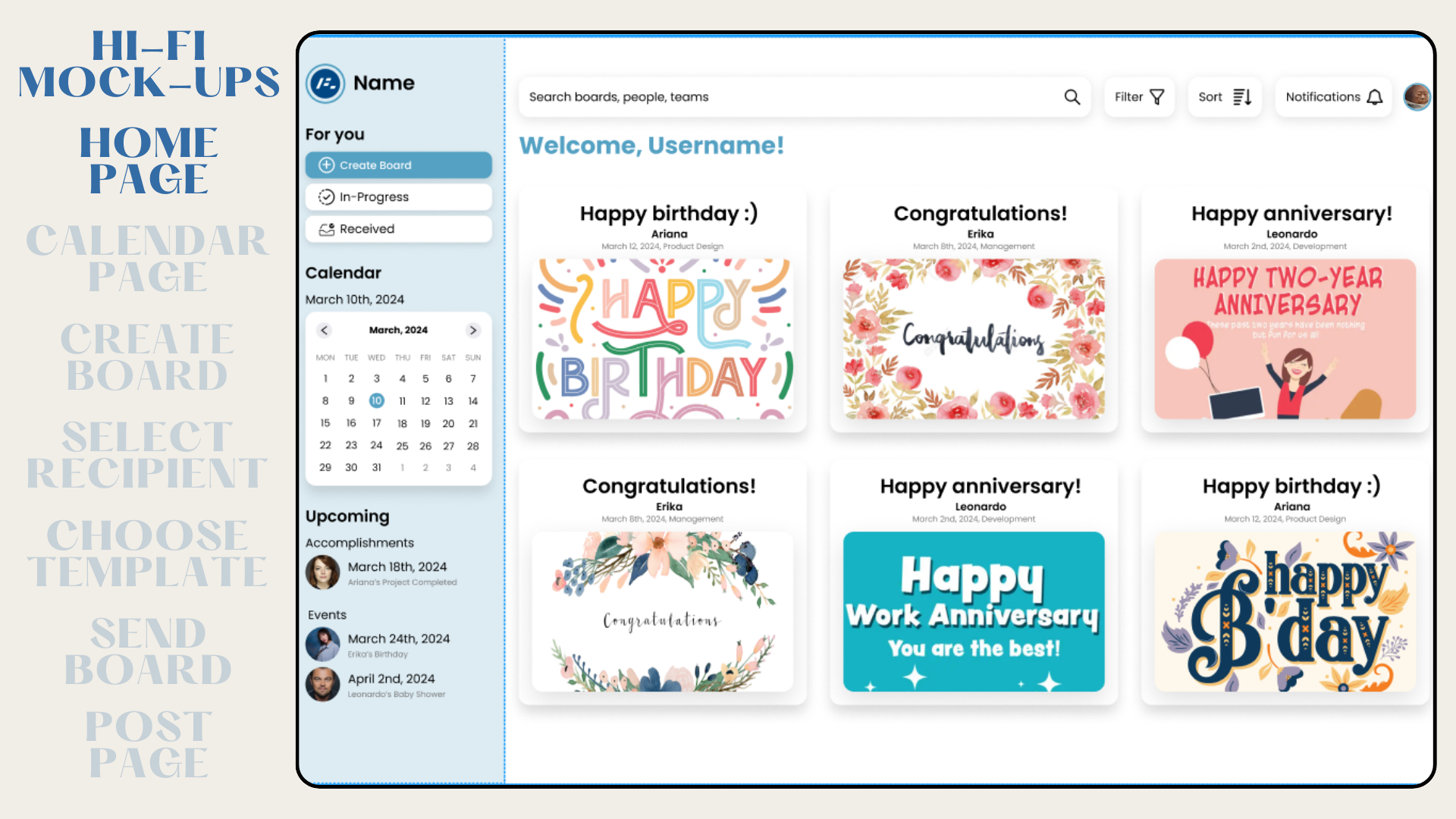
Home Page — boards at a glance with upcoming events
08
What We Shipped
Next Steps
Our designs were given to the company and passed over to the software engineer interns the past summer to bring our visions to life!
Project Reflection
This was my first year working on Experience Studio, and I had a lot of fun learning and experimenting with UX fundamentals. We had a lot of freedom when it came to designing and choosing the solution for our project prompt. I never knew that so much research went into designing — I've learned firsthand that without research to back up our designs, our designs wouldn't be successful.
I worked with the group that helped plan and create the homepage, although we all helped each other in designing and editing. I have a clearer understanding of the UX process, and I hope I can get better at following this process for my future projects.
Contributions
On this project, we worked as a team — no part was done more by a certain individual. However, initial drafts and research for the calendar and home page were done by Damaris Adeniji, Claire O'Malley, and me.
Learn More
Project Presentation
Want to dive deeper into our process, research, and final designs? View the full team presentation below.
Final PresentationNext Journey
Explore More Journeys→